Duck Breast with Pomegranate Glaze
Highlighted under: Family Collection
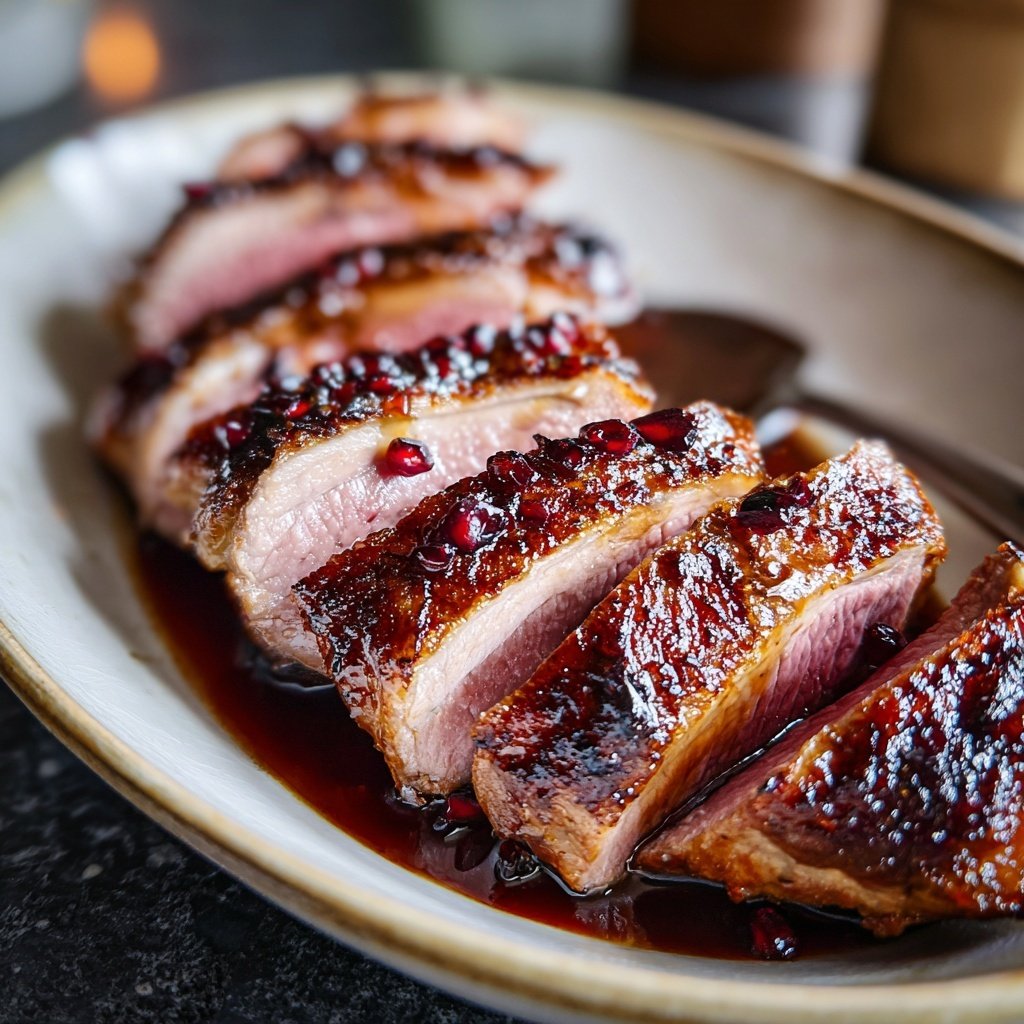
I love preparing Duck Breast with Pomegranate Glaze because it always impresses my guests and elevates any dinner occasion. The combination of rich duck meat and the sweet-tart flavor of pomegranate creates a dish that’s not only delicious but also visually stunning. While I enjoy cooking it for special occasions, I find that this recipe is surprisingly accessible for home cooks. With just a few simple ingredients and techniques, you can create a gourmet experience right in your kitchen!
My journey with Duck Breast with Pomegranate Glaze started as an experiment one evening when I craved something different. I had a few fresh pomegranates on hand, and the idea of combining their vibrant flavor with succulent duck breast felt adventurous. The outcome was fantastic, and that’s why I keep coming back to this recipe. A quick tip I learned is to score the duck skin properly; this allows the fat to render beautifully, crispening the skin.
As I perfected the technique over time, I discovered that balancing the glaze's acidity was key to enhancing the dish. By reducing the pomegranate juice just enough, I achieved a thick glaze that clung perfectly to the duck. The sauce not only compliments the meat but also provides a beautiful color contrast on the plate, making it a feast for the eyes and palate alike.
Why You'll Love This Recipe
- Rich duck flavor enhanced by tangy pomegranate sweetness
- Elegant presentation that impresses at any gathering
- A delightful balance of textures with crispy skin and tender meat
Mastering the Duck Breast
The key to perfectly cooked duck breast lies in the skin. Scoring the skin helps render the fat efficiently, resulting in a crispy texture. Take your time when scoring; each cut should be deep enough to penetrate the skin but not into the meat. This technique allows fat to escape, preventing the meat from becoming greasy while enhancing flavor. Aim for even scores about one inch apart for consistent cooking.
When cooking, starting in a cold skillet is crucial. It allows the fat to render gradually, crisping the skin beautifully without burning. Monitor the heat; if it becomes too hot, the skin may brown too quickly while the meat remains undercooked. If you see excessive smoke, lower the heat slightly. The goal is to achieve a golden, crispy skin before transferring the skillet to the oven for finishing.
Understanding the Pomegranate Glaze
The pomegranate glaze is where this dish truly shines. Pomegranate juice is naturally sweet and tart, complementing the rich flavor of duck. When simmering, keep an eye on the reduction; it should become thicker and more concentrated, turning glossy. If it reduces too much, add a splash of water to adjust the consistency. Remember to stir frequently to prevent sticking or burning at the base of the saucepan.
Cornstarch is used to thicken the glaze effectively, allowing it to coat the duck slices beautifully. Mix it with water to create a slurry before adding it to the glaze; this prevents lumps. If you’re out of cornstarch, arrowroot works as a great substitute and yields a similarly clear glaze. For added depth, try incorporating a splash of orange juice or an extra drizzle of honey into the glaze.
Ingredients
Ingredients
Duck Breast
- 2 duck breasts
- Salt and pepper to taste
Pomegranate Glaze
- 1 cup pomegranate juice
- 1 tablespoon honey
- 1 tablespoon balsamic vinegar
- 1 teaspoon cornstarch mixed with 1 tablespoon water
For Garnish
- Pomegranate seeds
- Fresh mint leaves
Instructions
Instructions
Prepare the Duck
Preheat your oven to 400°F (200°C). Score the skin of the duck breasts in a crisscross pattern, being careful not to cut into the meat. Season both sides with salt and pepper.
Cook the Duck
Place the duck breasts skin-side down in a cold, oven-safe skillet. Turn the heat to medium and cook for 6-8 minutes until the skin is crispy and golden. Flip the breasts and transfer the skillet to the preheated oven. Roast for an additional 10-12 minutes for medium-rare.
Make the Glaze
While the duck is cooking, combine the pomegranate juice, honey, and balsamic vinegar in a small saucepan over medium heat. Bring to a simmer and let reduce by half, then stir in the cornstarch mixture to thicken.
Serve
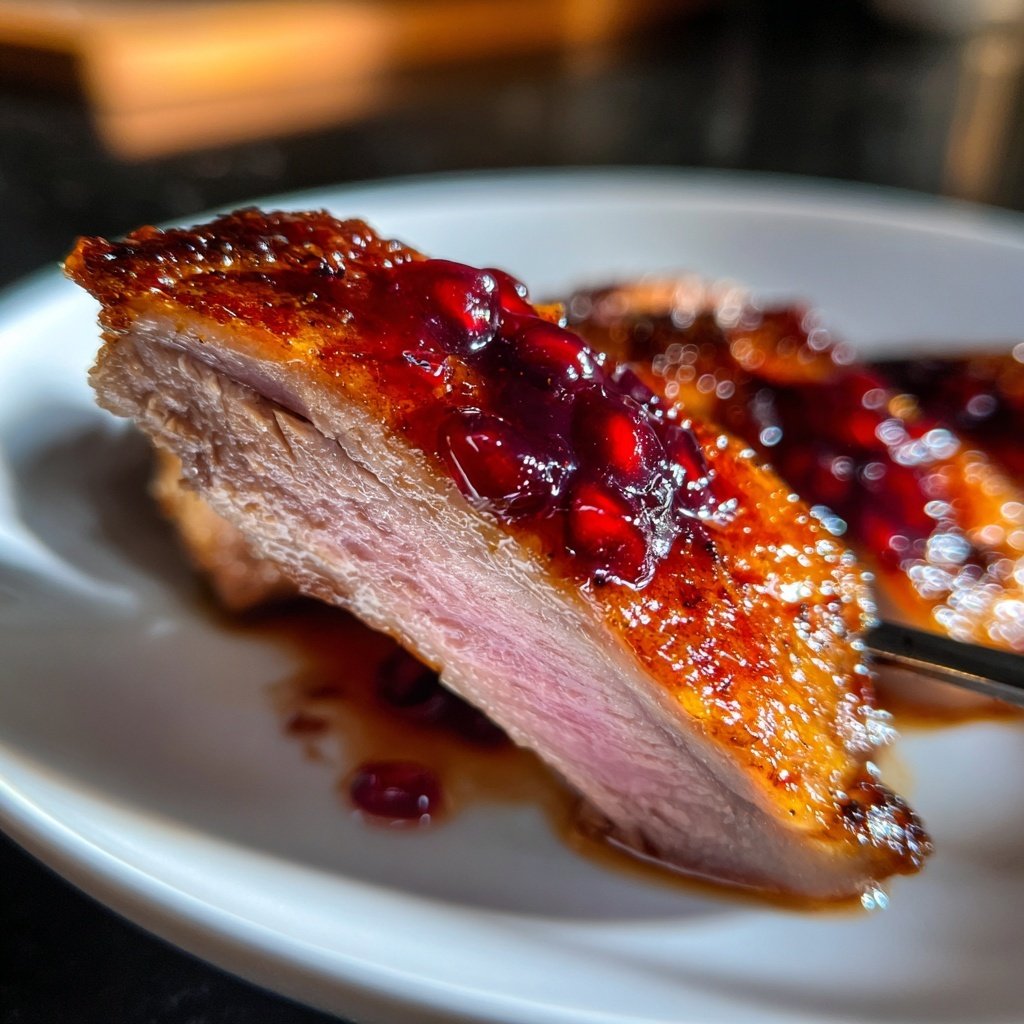
Let the duck rest for 5 minutes before slicing. Drizzle the pomegranate glaze over the slices and garnish with pomegranate seeds and fresh mint.
Pro Tips
- For an extra burst of flavor, try adding a splash of orange juice to the pomegranate glaze.
Serving Suggestions
For an elegant touch, serve the duck breast over a bed of creamy polenta or roasted seasonal vegetables. The contrasting flavors and textures enhance the dish, making each bite delightful. I often reserve the glaze to drizzle on a side of Brussels sprouts, which pair wonderfully with the sweetness of pomegranate, creating a beautiful plate that captivates both the eyes and palate.
Consider pairing this dish with a glass of Pinot Noir. The wine’s fruit-forward notes and acidity cut through the richness of the duck, adding balance to your dining experience. For a non-alcoholic option, craft a sparkling pomegranate mocktail with soda water and fresh mint to keep the flavor profile cohesive.
Storage and Reheating
This dish can be prepared ahead of time, making it a fantastic option for entertaining. After cooking, let the duck cool completely before wrapping it tightly in plastic wrap or foil. It can be stored in the refrigerator for up to three days. However, for the best texture, it's recommended to reheat it in a skillet over low heat rather than in the microwave, as this helps preserve the crispy skin.
If you have leftover pomegranate glaze, store it in an airtight container in the fridge. It will keep for about a week. To use it again, reheat on the stove until warm, stirring gently. You can also use up leftover glaze in salad dressings or as a topping for grilled meats, extending the versatility of this delightful sauce.
Questions About Recipes
→ Can I use frozen duck breasts?
Yes, just make sure to thaw them completely before cooking for even results.
→ What can I serve with this dish?
It pairs wonderfully with roasted vegetables or a simple green salad.
→ How do I know when the duck is done?
Use a meat thermometer; the internal temperature should read 135°F (57°C) for medium-rare.
→ Can I make the glaze ahead of time?
Yes, you can make the glaze and store it in the fridge for a few days; just reheat before serving.
Duck Breast with Pomegranate Glaze
Created by: Helena Whitby
Recipe Type: Family Collection
Skill Level: Intermediate
Final Quantity: 4 servings
What You'll Need
Duck Breast
- 2 duck breasts
- Salt and pepper to taste
Pomegranate Glaze
- 1 cup pomegranate juice
- 1 tablespoon honey
- 1 tablespoon balsamic vinegar
- 1 teaspoon cornstarch mixed with 1 tablespoon water
For Garnish
- Pomegranate seeds
- Fresh mint leaves
How-To Steps
Preheat your oven to 400°F (200°C). Score the skin of the duck breasts in a crisscross pattern, being careful not to cut into the meat. Season both sides with salt and pepper.
Place the duck breasts skin-side down in a cold, oven-safe skillet. Turn the heat to medium and cook for 6-8 minutes until the skin is crispy and golden. Flip the breasts and transfer the skillet to the preheated oven. Roast for an additional 10-12 minutes for medium-rare.
While the duck is cooking, combine the pomegranate juice, honey, and balsamic vinegar in a small saucepan over medium heat. Bring to a simmer and let reduce by half, then stir in the cornstarch mixture to thicken.
Let the duck rest for 5 minutes before slicing. Drizzle the pomegranate glaze over the slices and garnish with pomegranate seeds and fresh mint.
Extra Tips
- For an extra burst of flavor, try adding a splash of orange juice to the pomegranate glaze.
Nutritional Breakdown (Per Serving)
- Calories: 400 kcal
- Total Fat: 30g
- Saturated Fat: 12g
- Cholesterol: 90mg
- Sodium: 160mg
- Total Carbohydrates: 14g
- Dietary Fiber: 2g
- Sugars: 10g
- Protein: 25g